ASEAN’s Food Security: Why Adaptation Matters
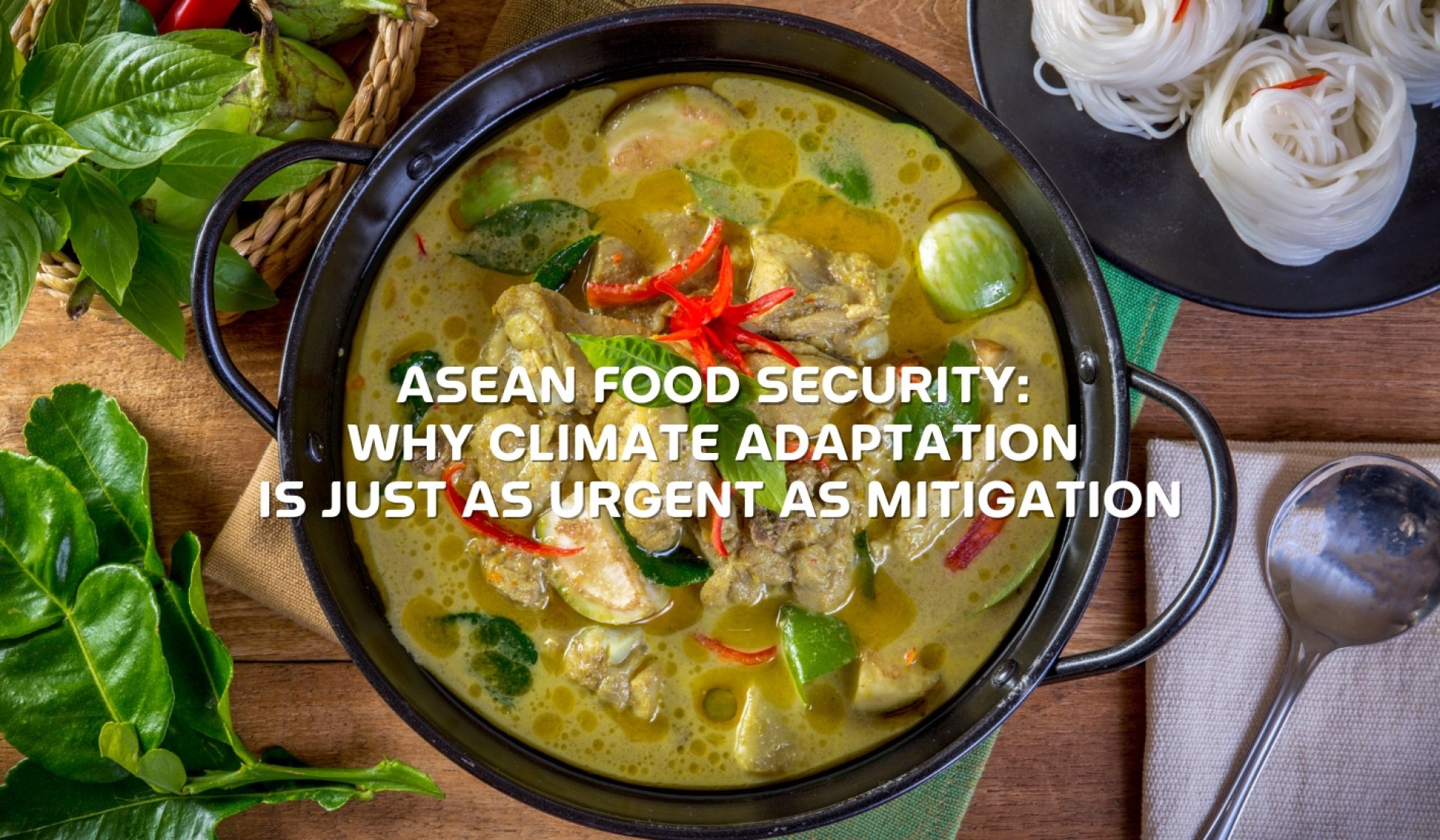
Climate change is no longer a distant threat --- it is a present reality, affecting economies, industries, and, most critically, food security. The year 2024 was the hottest on record, with global temperatures surpassing 1.5°C above pre-industrial levels for the first time. While reducing greenhouse gas (GHG) emissions remains a priority, adaptation strategies are equally crucial, particularly in Southeast Asia, where food security is at risk.
The Challenge: ASEAN's Climate Vulnerability
Despite contributing only 5.73% of global GHG emissions in 2023 (with Thailand at 0.83%), ASEAN nations are disproportionately impacted by climate change. The region faces rising temperatures, unpredictable weather patterns, prolonged droughts, and devastating floods --- all of which disrupt food production, reduce crop yields, and threaten the livelihoods of millions.
As global mitigation efforts struggle to meet targets, ASEAN must focus on adaptation to ensure its food systems remain resilient.
Key Adaptation Strategies for Food Security
1️ Climate-Smart Agriculture
2️ Diversification of Food Sources
3️ Sustainable Land & Water Management
4️ Renewable Energy in Agriculture
The Challenge: ASEAN's Climate Vulnerability
Despite contributing only 5.73% of global GHG emissions in 2023 (with Thailand at 0.83%), ASEAN nations are disproportionately impacted by climate change. The region faces rising temperatures, unpredictable weather patterns, prolonged droughts, and devastating floods --- all of which disrupt food production, reduce crop yields, and threaten the livelihoods of millions.
As global mitigation efforts struggle to meet targets, ASEAN must focus on adaptation to ensure its food systems remain resilient.
Key Adaptation Strategies for Food Security
1️ Climate-Smart Agriculture
- Investing in crop varieties that can withstand extreme weather conditions
- Implementing precision farming techniques to optimize water and fertilizer use
2️ Diversification of Food Sources
- Encouraging the production of drought- and flood-tolerant crops such as millet and pulses
- Strengthening supply chains and stockpiling essential food items to reduce dependency on imports
3️ Sustainable Land & Water Management
- Expanding irrigation efficiency and soil conservation techniques
- Protecting high-carbon ecosystems (e.g., forests, mangroves, and peatlands) to balance food production with environmental conservation
4️ Renewable Energy in Agriculture
- Exploring clean energy solutions for food production and transportation
- Supporting smallholder farmers with sustainable farming innovations
- The Road Ahead: ASEAN's Role in Climate Leadership
With Malaysia's ASEAN Chairmanship in 2025 focusing on "Inclusivity and Sustainability," this is a pivotal moment for the region to lead in climate adaptation. The ASEAN Strategic Plan for Food, Agriculture, and Forestry (2026-2030) presents an opportunity to drive policies that enhance food security through climate resilience. Additionally, COP30 in Brazil offers a platform for ASEAN nations to advocate for greater funding and innovation in adaptation measures.
Join the Conversation
At ExpresSo NB, we're committed to exploring solutions that drive climate resilience and food security. What adaptation strategies do you think are most effective?
Referrence : https://fulcrum.sg/asean-food-security-climate-adaptation-as-urgent-as-mitigation/
Related Content

Digital innovation is key to Asia's clean energy future—empowering grids, people, and communities for a just energy transition.

Discover four key sectors—agriculture, energy, cities, and water—to invest in and drive impactful climate adaptation innovations.

The carbon offset market is set to hit $15 trillion by 2050, with companies like Disney, Microsoft, and Exxon Mobil investing billions.
